

Optimization of nutritional balances for cultivation
The National Institute of Agricultural Research (INIA) plays a fundamental role in Uruguay's agri-food system, generating scientific and technological knowledge to improve the sector's productivity and sustainability. Since its founding in 1989, INIA has established itself as a leader in agricultural research, developing innovative solutions to address the challenges of the sector. As part of its ongoing commitment to agricultural efficiency, INIA sought to modernize the management of recommendations and calculations for fertilization and irrigation in its main greenhouse crops: tomato and sweet pepper.
The Challenge
INIA needed to improve the accuracy and speed of estimating nutrient balances in agricultural-livestock systems, given the variability between farms and practices. It sought to standardize the calculation process based on user-provided data and predefined coefficients, in order to support decisions on fertilization, feeding, and sustainability, while also ensuring traceability and comparability between scenarios.
The Solution
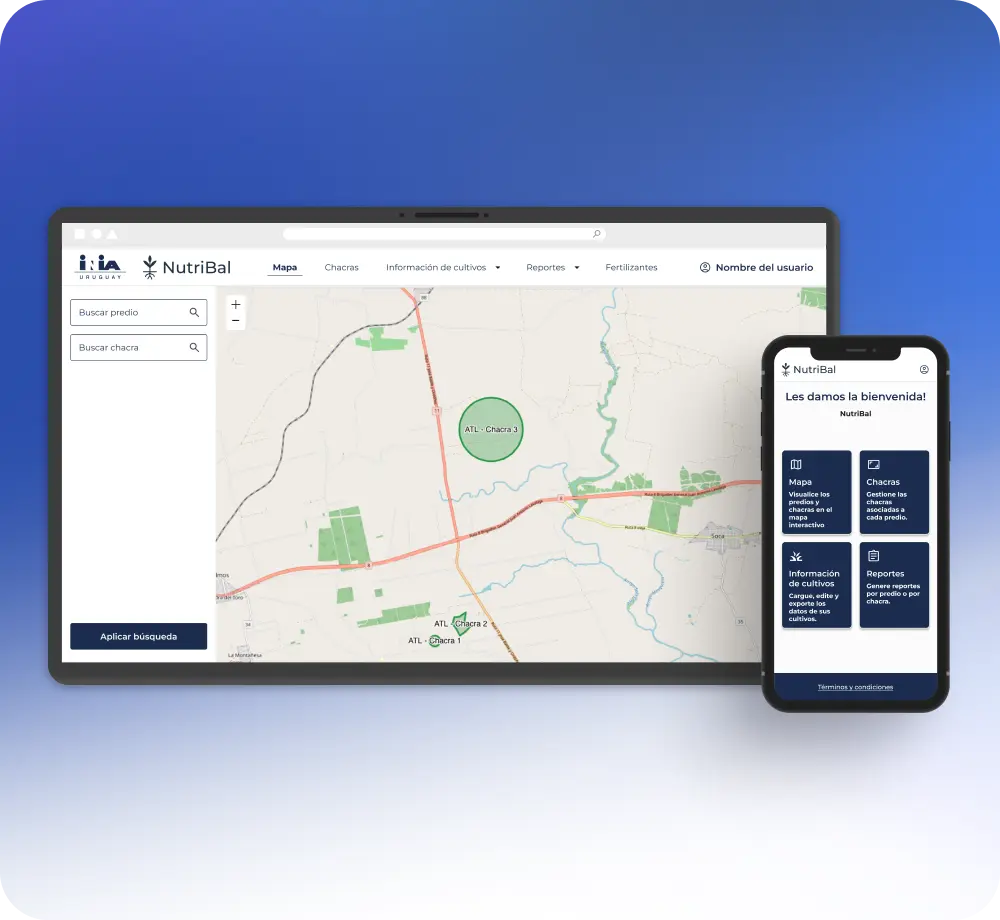
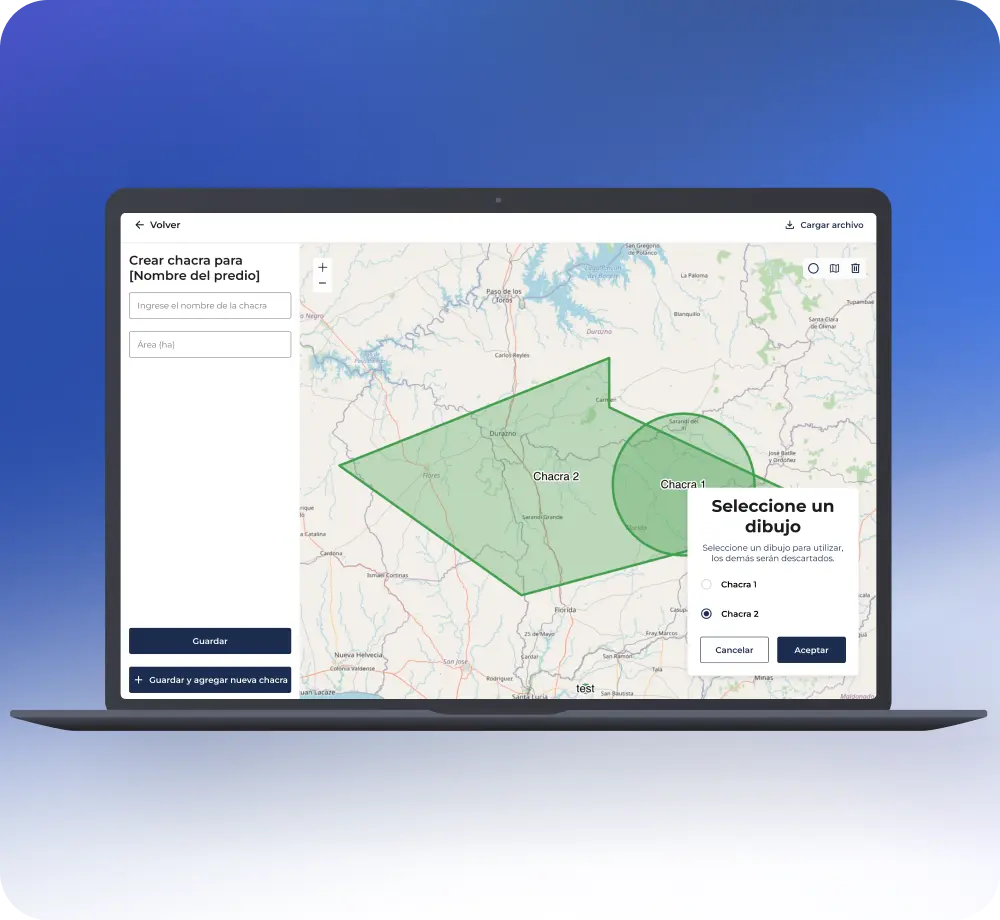
The solution proposed by DigitalProjex is a web application for calculating nutrient balances in agricultural-livestock systems called NutriBal. The solution is structured with two key components: managing fields and calculating balances. First, the management of fields and paddocks was enabled, allowing the user to create multiple plots and group them by establishment, identifying them with relevant data such as location and size. Second, the functionality for calculating the apparent nutrient balance was developed, which integrates the information provided by the producer with technical coefficients predefined by INIA to estimate the balances of each field and, if applicable, groups of fields. Overall, the solution organizes farms and fields and automates the calculation of balances using standardized coefficients.
The Result
The platform, consisting of backend and frontend, facilitates the efficient management of properties, farms, and fertilizers, improving traceability and organization at the farm level for INIA and its users. By allowing advanced users and allied institutions to directly and automatically utilize technical models, the accuracy of balances is increased, errors are reduced, and decision-making is accelerated, promoting standardization and interoperability.

Discover more projects
-
 CLIMArroz
Monitoring of phenological and climatic events
-
 Klendar
Improving the customer service experience
-
 FertiRIEGO Horticulture
Information for irrigation and fertilization
-
 HPV UY
Platform against cervical cancer
-
 JDVA
JDVA
Real-time financial management
-
 EQUUSID
Your horse's health, in the palm of your hand.
-
 Canelones Coast
Managing the coastal areas of canelones
-
 Soy
Soy
Sports Digital Transformation
-
 MLUTE
MLUTE
Improving the training of workers
-
 National Climate Action Observatory
We monitor what is promised. We evidence what is fulfilled.
-
 Portal of Club Nacional de Football
The portal of the tricolor fans
-
 Lanas Trinidad Maintenance System
Managing the maintenance process
-
 Yeda
Yeda
Improving the health and quality of life
-
 Northeast Transportation System
Management Transportation System
-
 QR FARMA
Optimized distribution of pharmaceutical samples
-
 Unified Portal of the Uruguayan State
Unified Portal of the Uruguayan State
-
 WeChat generator
WeChat generator
-
 Travelka
Driver management and cargo logistics
-
 MyShopBox Package Management System
Enjoy Seamless Online Shopping
-
 Lanas Trinidad App colector
Improving Wool Collection Processes
-
 Optifert-N
Nitrogen fertilization for yield multiplication.
-
 ANDA: Online Services Platform
ANDA, organized solidarity.
-
 Control system for advertising schedules and national music.
Time control of advertising guidelines and national music
-
 URF Managing insurance policies
Managing insurance policies
-
 RiegOK V 2.0
Geographic information system for water balance
-
 URF Laboratory and logistics management systems
Optimizing efficiency and accuracy in labs and logistics.